
The Short Answer
Most dents are cosmetic and can be left alone, popped out, or filled without touching the door's safety or function. A smaller number are structural — they bend the panel's internal ribs, throw off the door's balance, or sit near a hinge or track — and those need a repair or replacement before the door is used again. The trick is telling which kind you're looking at, and that comes down to size, location, and whether the door still moves the way it should.
Why the Material Matters
Garage doors are usually steel, aluminum, or wood composite, and each dents differently.
- Steel is the most common choice and the most forgiving. A shallow dent often stays put without spreading, and smaller dings can sometimes be worked out from the back with steady, gentle pressure.
- Aluminum is lighter and dents more easily, but it also creases rather than just denting — a hard hit can leave a sharp fold that's tough to pull back out cleanly.
- Wood composite doesn't usually dent so much as crack, split, or swell, especially after it's been damp. Florida humidity makes wood panels more prone to swelling around an impact, which can jam the door even if the dent itself looks minor.
Cosmetic Dent or Structural Problem? How to Check
Settle the argument with a quick walk-around instead of a guess. Look for these signs:
- Size and depth. A shallow, coin-sized dent from a bike pedal or a bumped ladder is almost always cosmetic. A dent you can set a golf ball into, or one that's dented inward more than an inch, is more likely to have bent the panel's internal bracing.
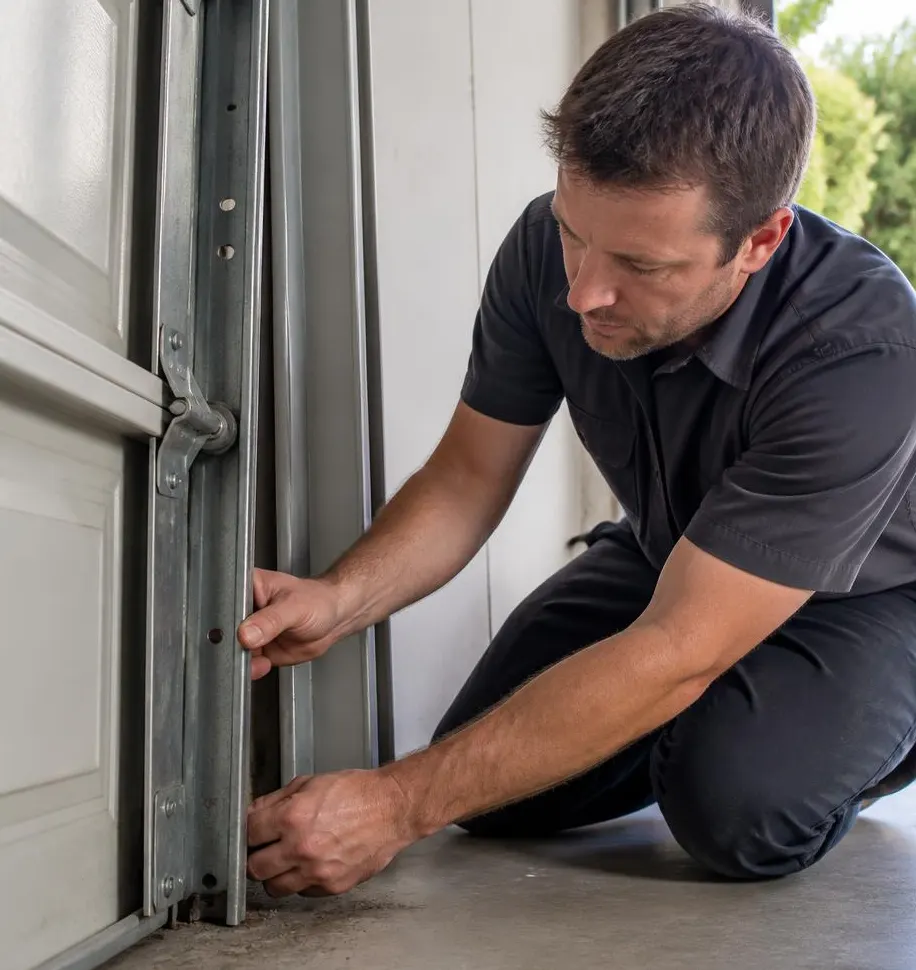
- Location on the panel. Dents in the flat center of a panel rarely affect anything but looks. Dents near the edge of a panel, around a hinge, near the end stile (the vertical edge where panels connect), or anywhere close to the track are a different story — that's where the door's moving parts attach, and a bent edge can throw the whole panel out of alignment.
- How the door moves. Open and close it slowly and watch. If it binds, scrapes the track, or the opener strains and reverses, the dent has likely warped the panel enough to affect how it rides in the track. That's structural, not cosmetic, no matter how small the dent looks.
- Gaps and light. With the door closed, check for new gaps along the bottom or sides, or daylight showing through where it shouldn't. A dent that's pushed a panel out of its track alignment will often show up this way first.
What Actually Gets Fixed vs. Replaced
Small, shallow dents on steel doors can sometimes be pulled out with a suction-cup dent puller or gently tapped out from behind, then touched up with body filler and matching paint — a reasonable DIY weekend job if the door still operates smoothly. Dents on wood composite are harder to fix cleanly; filler and paint can hide a crack but won't restore the panel's strength if moisture has already gotten in.
Once a dent has bent the end stile, crimped the track-side edge, or changed how the panel sits against its neighbors, panel replacement is usually the better call. Garage doors are built in sections, so in most cases only the damaged panel needs to be swapped, not the whole door — as long as the model is still available or a close match can be sourced.
Why This Matters More in Central Florida
A dent that's purely cosmetic in a dry climate can become a bigger problem here. Afternoon storms and humid air find their way into any crease or gap a dent creates, and steel panels with chipped paint over a dent will start rusting from the inside out faster than people expect. During hurricane season, a door that's supposed to meet wind-load ratings is only as strong as its weakest panel — a structurally dented section can compromise the whole door's ability to hold up against wind pressure, which is exactly when you don't want it to fail.
When to Call Lakeland Garage Door Repair
If the dent is near a hinge, track, or end stile, if the door is binding or scraping, or if you're heading into storm season and want to know the door will actually hold up, it's worth having it looked at before it becomes a bigger repair. We offer Garage Door Panel Replacement for dents that have gone past cosmetic, and Garage Door Track & Cable Repair for cases where the impact has knocked the door out of alignment rather than just dented the metal. We'll tell you straight whether it's a quick fix or worth replacing — no upselling, just an honest look.
If you've got a dent you and your spouse can't agree on, call Lakeland Garage Door Repair and we'll settle it for you — serving Lakeland, Winter Haven, Bartow, Plant City, Auburndale, Mulberry, Polk City, and Haines City, FL.