
Insulated Garage Doors in Lakeland: Worth the Money or Not?
Short answer: it depends on what's on the other side of your garage wall. If your garage shares a wall with living space, holds a workshop, or sits under a bedroom, insulation earns its keep. If it's a detached garage used only to park cars and store the mower, you're probably paying extra for a number that doesn't change your life.
What R-value actually measures
R-value measures resistance to heat transfer through the door panel. It was designed for climates where keeping a heated house warm is the main job. A higher R-value door slows down how fast heat moves from one side to the other — that's it. It doesn't make the door stronger on its own, and it doesn't stop humidity from getting in around the edges.
Why the Florida climate changes the math
In Lakeland, the problem most of the year isn't keeping heat in, it's keeping heat and humidity out. An uninsulated steel door heats up fast in direct afternoon sun, and that heat radiates into whatever is next to it — the laundry room wall, the AC air handler, the kids' playroom above the garage. An insulated door slows that radiant heat transfer, which can take some load off your AC and make an attached garage noticeably more tolerable to walk into.
But the bigger local factor is wind, not temperature. Insulated doors are almost always built with a sandwich construction — steel, foam core, steel — which makes the panel stiffer and more resistant to flexing and denting. That extra rigidity is a real advantage during hurricane season, since a stiffer panel holds its shape better under wind pressure and debris impact than a thin single-layer door. So the real win with an insulated door during storm season is structural, even though people shop for it thinking about temperature.
Who actually benefits
- Attached garages: if a wall of your garage touches an air-conditioned room, insulation reduces heat and noise crossing that boundary.
- Garages used as workshops or hobby space: if you're in there for hours with power tools, a window AC unit, or just trying to keep the space tolerable in July, insulation makes a real difference in comfort.
- Homes with a room above the garage: heat rises, and an uninsulated door lets more of it build up underneath that room all afternoon.
- Anyone who wants a quieter door: insulated panels dampen vibration and rattle, which matters if the garage is under a bedroom or near a home office.
Who's paying for nothing
- Detached garages used purely for parking and storage: there's no air-conditioned space to protect, so the thermal benefit is mostly wasted.
- Garages that stay open most of the day anyway: if the door is up half the time for projects or airflow, the insulation value never gets a chance to work.
- Anyone buying based on R-value alone, ignoring wind rating: a high R-value door with a weak wind rating is the wrong priority for this area. Check the wind-load rating first, insulation second.
The trade-off nobody mentions: trapped moisture
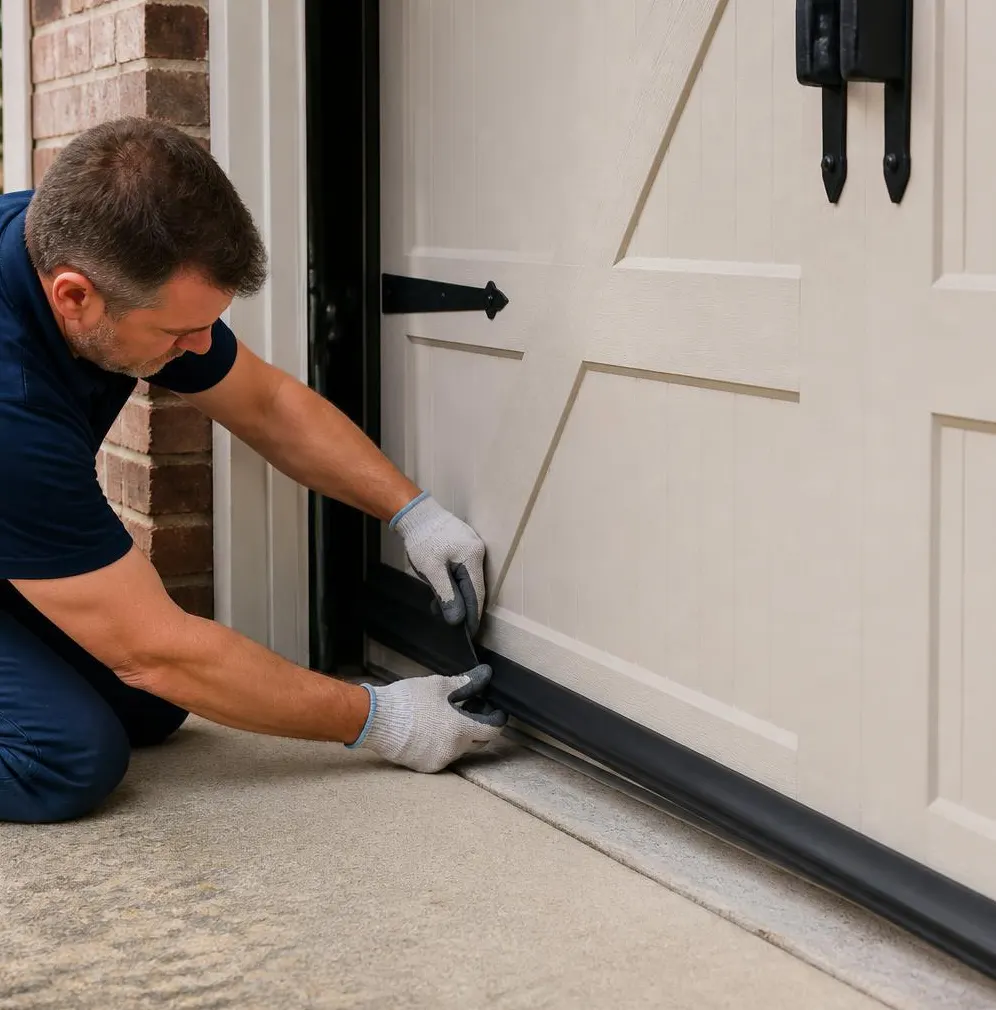
Sandwich-construction doors have more seams and foam-filled cavities, and foam can hold moisture if weatherstripping fails and humid air keeps getting pulled in and out with the door's movement. Over seasons of Florida humidity and afternoon downpours, a door with worn-out seals can rust from the inside out before the rust ever shows on the surface. If you go insulated, budget for keeping the bottom seal and side weatherstripping in good shape — it's doing more work than people realize.
Pricing, in general terms
As a rough national range, basic single-layer steel doors typically run on the lower end of the garage door price spectrum, while insulated double- or triple-layer doors cost more upfront. The gap is usually worth it for attached garages and workshops, and harder to justify for a detached storage garage that just needs to open and close reliably.
When to call Lakeland Garage Door Repair
If you're weighing insulation because your current door is dented, rattling, or struggling to seal out humidity and bugs, that's worth a look before you decide. We handle Garage Door Installation for homeowners upgrading to an insulated, wind-rated door, and Garage Door Panel Replacement for cases where only part of the door needs attention instead of a full replacement. We'll walk your garage, tell you honestly whether insulation will actually do anything for your setup, and make sure whatever you choose meets the wind-load expectations for this area.
Call Lakeland Garage Door Repair for a straight answer on insulation, wind ratings, and what's actually worth paying for — serving Lakeland, Winter Haven, Bartow, Plant City, Auburndale, Mulberry, Polk City, and Haines City.